Plastic tank radiators have not changed much over the last 25 years.
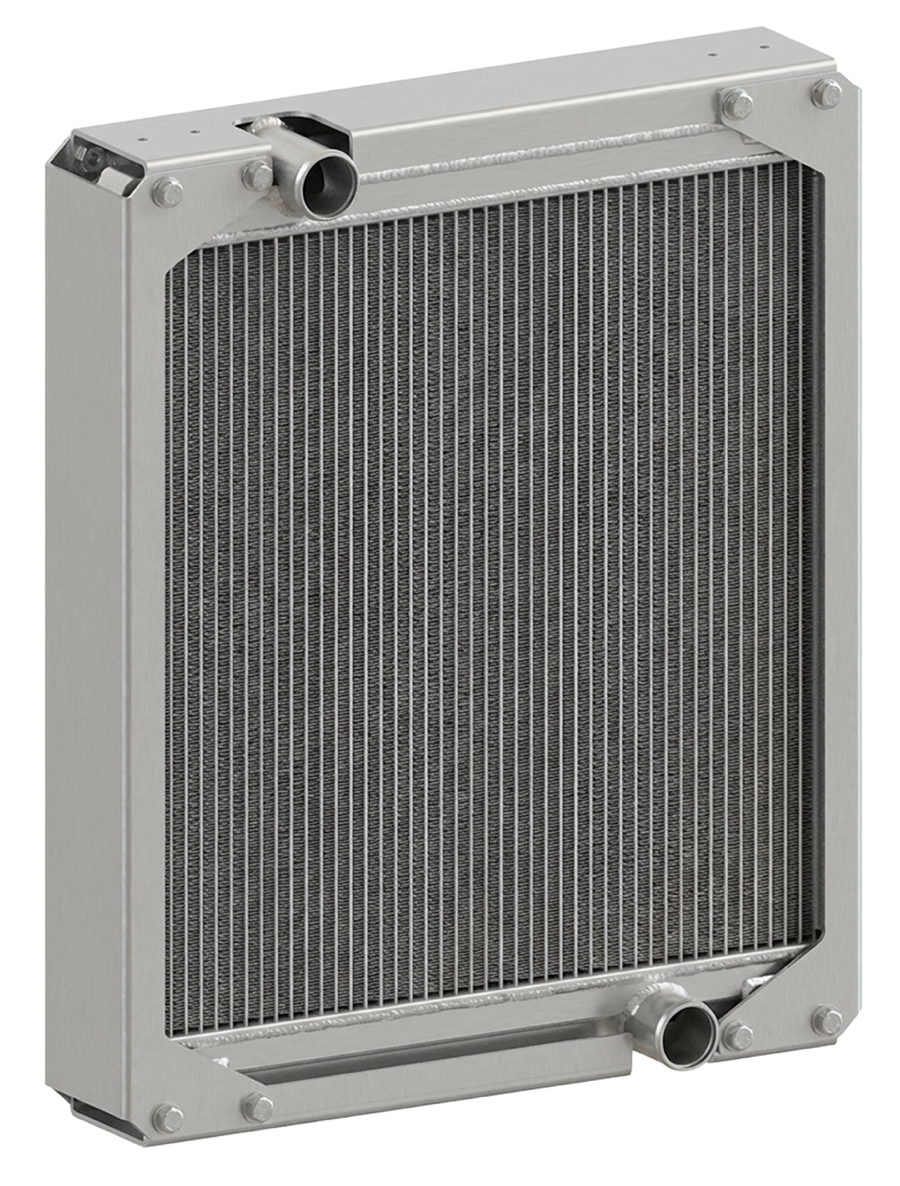
Introducing the most revolutionary design since the introduction of plastic tank radiators — the “ACTIVE ISOLATOR™” patent pending.
Announcing
The ACTIVE ISOLATOR™
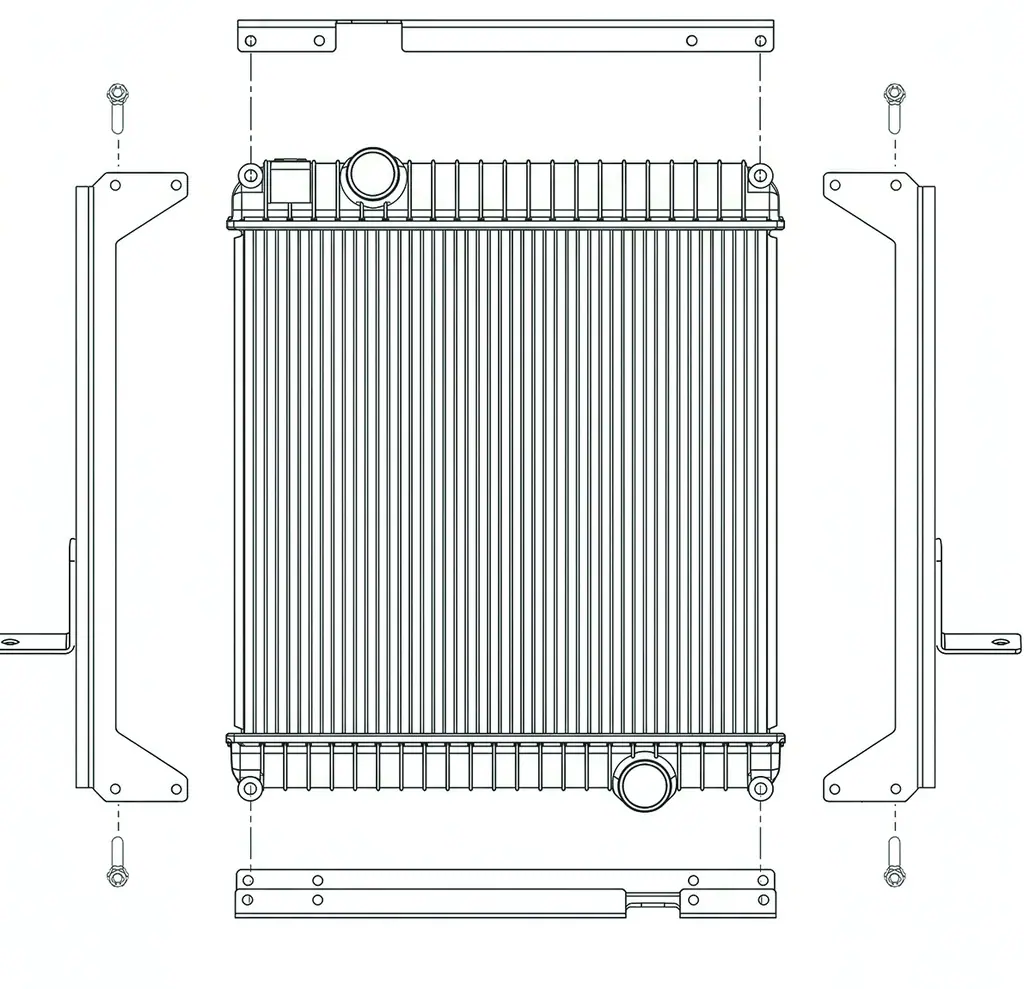
Most plastic tank truck radiators are mounted into a frame with bolts and pins. The frame of the radiator is then mounted to the frame of the truck. Road vibration travels directly up the radiator frame to the bolts and pins, then into the top tank and corners of the core — causing cracks in the tanks and corner tubes.
The quality of the radiators isn’t the issue. It’s how the radiator is mounted into the frame.
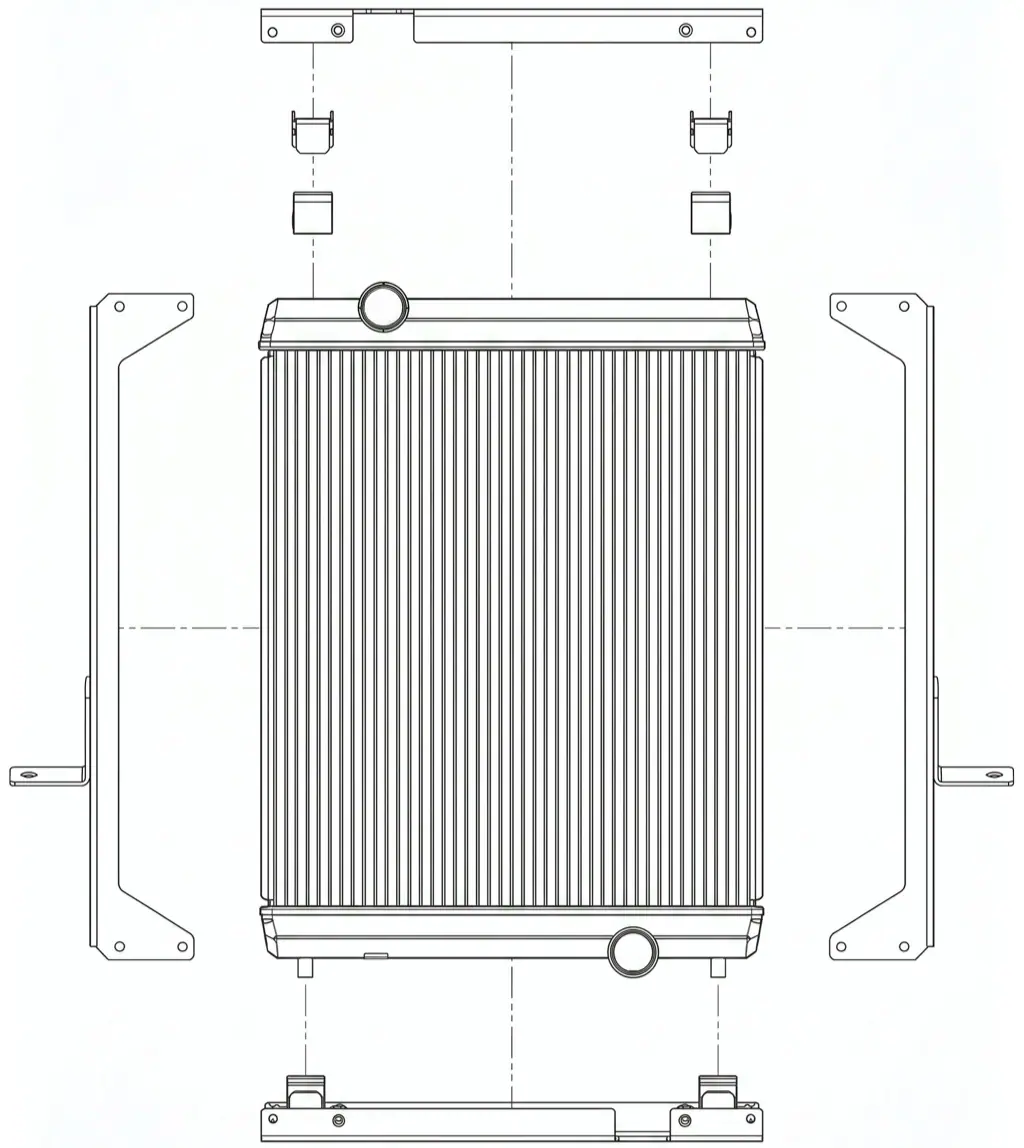
The “ACTIVE ISOLATOR™” uses metal tanks and eliminates the pins and bolts. The radiator is mounted into the frame with rubber isolators — so vibration from the road travels up the frame and bypasses the radiator entirely.
Watch where the road vibration goes in each design. In conventional mounts it drives straight into the radiator core. The Isolator routes it around the radiator entirely.
Prior design
Vibration travels straight into the radiator
Plastic-tank truck radiators are mounted into a frame with bolts and pins. Road vibration runs straight up the frame and into the bolts — then into the top tank and corners of the core, cracking tanks and corner tubes.
Vibration goes directly to the mounting pins
The ACTIVE ISOLATOR™
Vibration flows around the radiator
The ACTIVE ISOLATOR™ uses metal tanks and eliminates the pins and bolts. The radiator is mounted into the frame with rubber isolators — so vibration from the road travels up the frame and bypasses the radiator entirely.
Vibration goes around the frame — the radiator is unaffected
This radiator design will last longer than anything on the market today.
Thermal cycle test results
Filled with anti-freeze flowing at 208°F. Pressurized from zero, every 4 seconds. No leaks. No deformation.
Cycles 1 – 100,000
25PSI
No leak or deformation
Pressurized 0 → 25 PSI every 4 seconds
Cycles 100,000 – 150,000
37.5PSI
No leak or deformation
Pressurized 0 → 37.5 PSI every 4 seconds
Cycles 150,000 – 200,000
50PSI
No leak or deformation
Pressurized 0 → 50 PSI every 4 seconds
Find your nearest branch
Tap to call any Active Radiator branch — we’ll match the Isolator to your truck and quote freight to your shop.